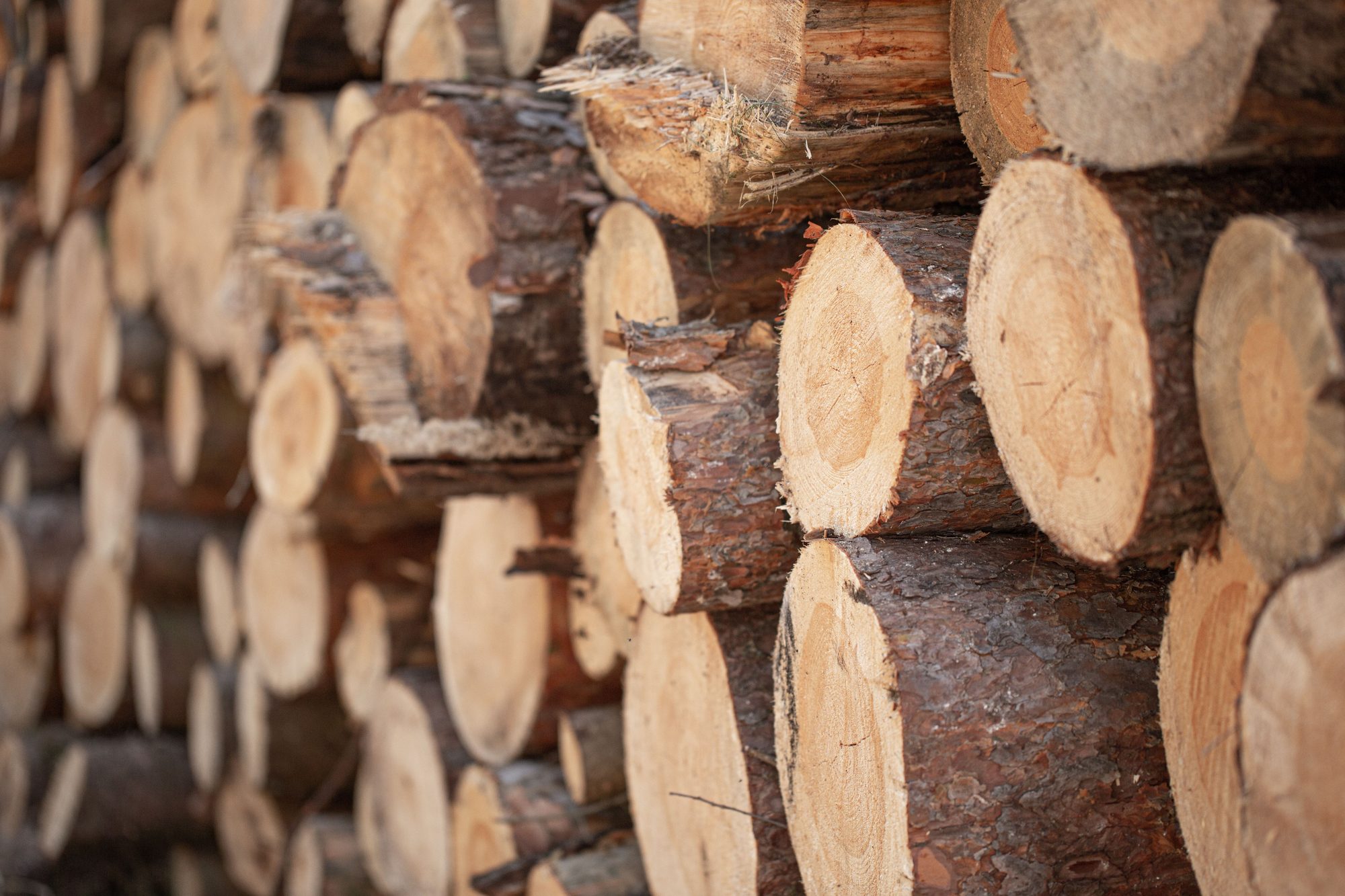
A bipartisan bill in Congress would expand the types of wood, manufacturing residuals and forest-management debris eligible as feedstock under the Renewable Fuel Standard, a change supporters say could create new markets for the South’s struggling timber industry.
The Wildfire Reduction Market Expansion Act of 2026, introduced July 22 as H.R. 9827 in the House and S. 5087 in the Senate, would amend the Clean Air Act's definition of "renewable biomass" under the Renewable Fuel Standard (RFS). The bill has 33 House cosponsors and backing from more than 75 organizations, according to a press release from Sen. Jeff Merkley's office.
Two Georgia members of Congress have cosponsored the House version. Rep. Sanford Bishop, a Democrat representing Georgia's 2nd District, signed on July 30. Rep. Austin Scott, a Republican representing the 8th District, joined Sept. 15, according to congressional records.
The bill matters to Georgia because the state leads the nation in timber production, with 88% of its woodlands owned by individuals and businesses, the Wall Street Journal reported on Aug. 28. The South has been hit by a wave of pulp and paper-mill closures driven by recycled boxes, cheap imported pulp and more efficient packing by e-commerce companies. Pulpwood prices across the region are at their lowest in nearly 40 years before inflation, the Journal reported, and some growers are paying to have their pulpwood hauled away.
Under the bill, qualifying materials would include sawdust, wood chips, bark, paper residuals and other manufacturing byproducts. Trees, shrubs and parts of trees from non-federal land managed under a forest sustainability certification program or classified as forest land for property-tax purposes would also qualify. Material from National Forest System land and tribal land is included under separate conditions.
Sen. Cindy Hyde-Smith, a Mississippi Republican and cosponsor, said the bill "clears the way for biomass produced from non-federal lands in heavily forested states like Mississippi to contribute to the nation's renewable fuels resources."
Dave Tenny, president and CEO of the National Alliance of Forest Owners, called the legislation a tool for "addressing the wildfire crisis and the ongoing closures of wood-consuming paper mills by unlocking practical markets for low-value wood and mill residuals," according to Merkley's office.
The stakes are visible in southeast Georgia.
Bill Howard, a fourth-generation sawmill operator in Statesboro who employs about 300 people, told the Journal that pulpwood prices collapsed after International Paper closed an 89-year-old containerboard mill in Savannah and another south of the city. ArborGen, one of the world's largest suppliers of loblolly pine seedlings, reported its southern sales volume dropped more than 20% over its past two fiscal years.
The bill has been referred to the House Committee on Energy and Commerce.
Neither of Georgia's U.S. senators appears on the list of Senate cosponsors published by Merkley's office, which names Sens. Alex Padilla, John Kennedy, Jeanne Shaheen, Susan Collins and Angus King alongside Merkley and Hyde-Smith.