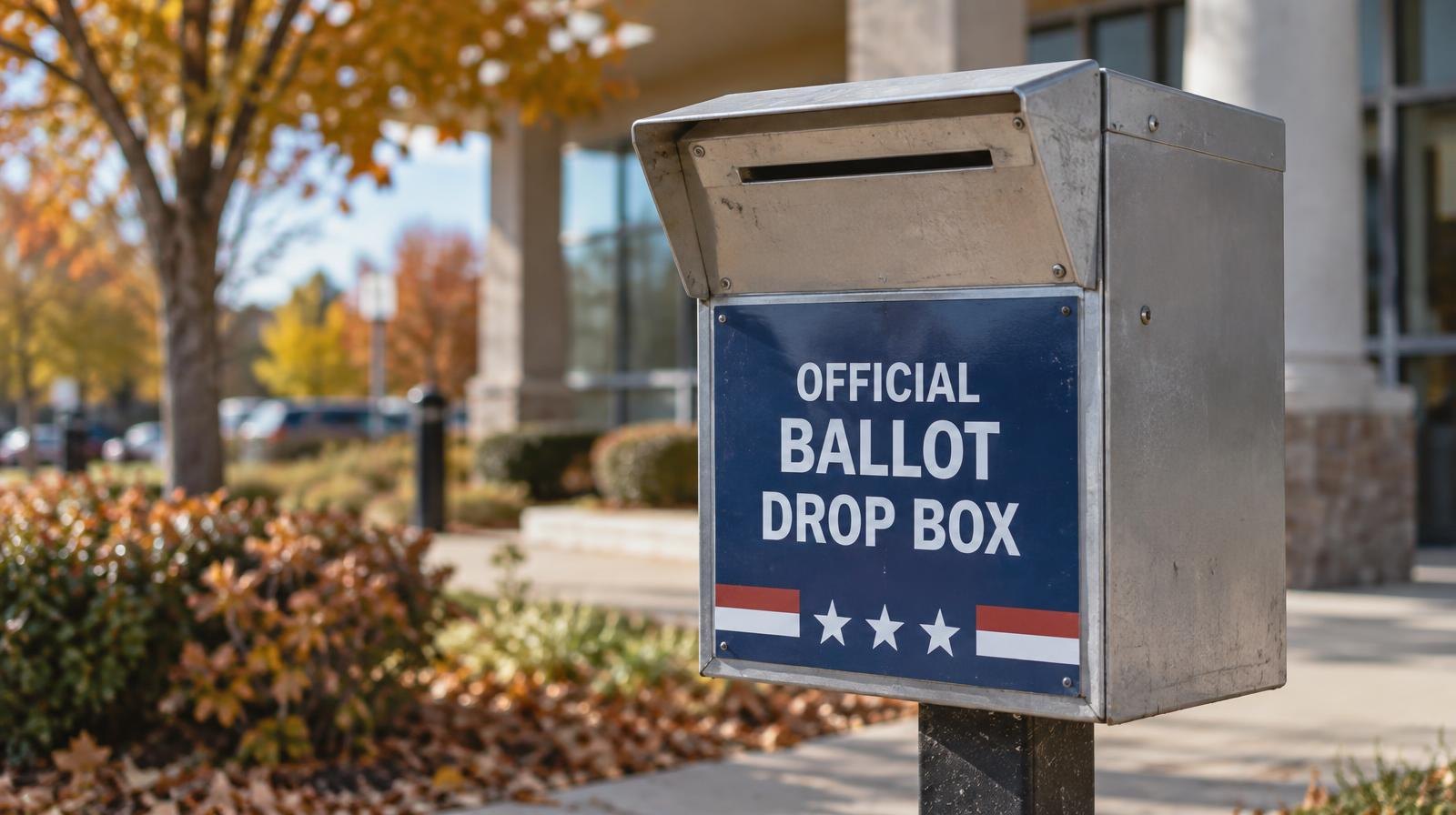
Alpharetta and Milton voters will head to the polls on Tuesday, November 3 with three contested races on their ballots, and President Donald Trump's claim that China stole 220 million voter files has thrust Georgia's election-security debate back into the center of all of them.
Trump made the assertion in a primetime address from the White House on Thursday, July 16. He said voter data in 18 states was "bought, stolen or hacked by China" starting during the 2020 election cycle, and directed the Office of the Director of National Intelligence, the Justice Department, the FBI, and the CIA to investigate.
A USA TODAY review of the declassified intelligence records the White House released to support the claims found the documents contradict several of Trump's assertions. The National Intelligence Council's own assessment stated that Beijing did not interfere with election infrastructure, including vote tabulation or the transmission of election results.
Georgia Republican elections official Gabriel Sterling was blunt. "I was shocked there was nothing new," Sterling told CNN on Friday, July 17, the day after the speech.
Fulton County probe expands
A federal judge's ruling and an expanding FBI investigation form the local backdrop.
On July 7, U.S. District Judge William M. Ray II denied the Justice Department's grand jury subpoena seeking personal information of thousands of Fulton County election workers. Ray, a Trump appointee, called the request an "arbitrary fishing expedition" and ruled the statute of limitations on any 2020 crimes had expired.
The FBI in January 2026 served a search warrant at the Fulton County election hub in Union City and seized roughly 700 boxes of election materials, according to CNN. By early July, the bureau had assigned 260 additional intelligence analysts to the case, CNN reported, calling it a "priority investigation."
Georgia's 2020 presidential results were counted three times, including once by hand. Each count affirmed Joe Biden's win.
Sen. Jon Ossoff warned on Tuesday, July 14, two days before the speech aired, that Trump might use the claims "as a pretext, either for some attempted unconstitutional use of federal power to interfere in the election, or to give his proxies and loyalists in state and local jurisdictions some cover for whatever they might attempt."
Three races on the November 3 ballot
U.S. House, Georgia's 7th District: Republican Rep. Rich McCormick, who has held the seat since January 2023, faces Democrat Tony Kozycki. McCormick ran unopposed in the May 19 Republican primary, collecting 83,566 votes. He won the district in 2024 with 64.9%.
U.S. Senate: Democrat Jon Ossoff faces Republican Mike Collins, a trucking executive and former congressman who won the GOP primary runoff in June after receiving Trump's endorsement. Collins told CNN's Manu Raju on Monday, June 16, that "Trump won that race," referring to the 2020 election. Ossoff raised $20 million in the second quarter of 2026 and had $42 million on hand, compared to Collins' roughly $2.1 million, according to the Associated Press.
State Senate District 21: Republican Jason Dickerson, who took office October 14, 2025, after winning a special election to replace Brandon Beach (appointed U.S. Treasurer by Trump), faces Democrat Kori Simmons.
Elections expert David Becker, a former Justice Department voting rights official who heads the Center for Election Innovation & Research, told CBS News that voter files are largely public records already available to campaigns and researchers. The general election is Tuesday, November 3.