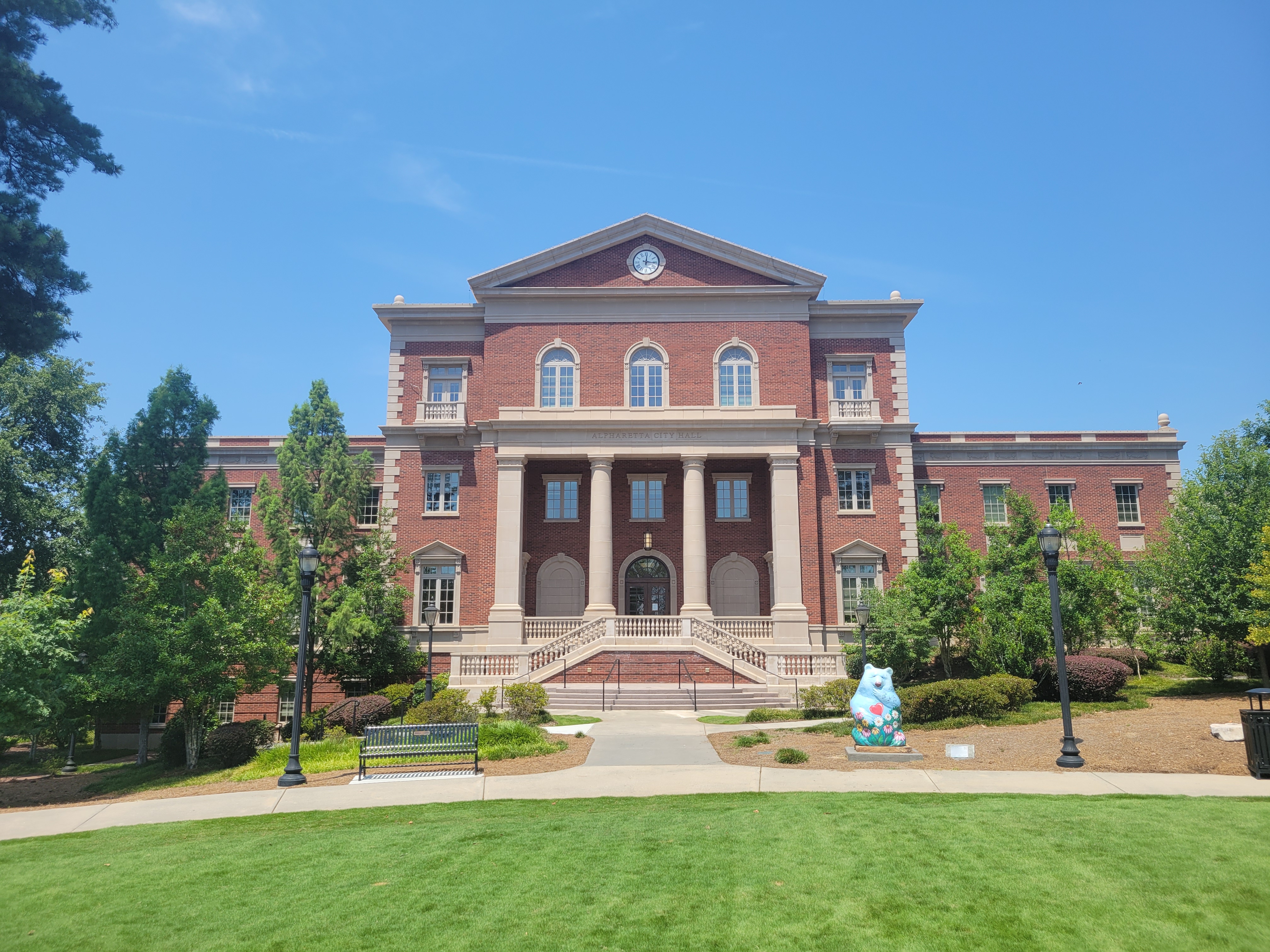
More than one in four Alpharetta residents was born outside the United States. A federal plan to revoke up to 200,000 tourist and business visas nationwide could directly affect families in this community, though no one knows exactly how many.
The Trump administration is preparing to cancel B-1 business and B-2 tourist visas held by foreign nationals who entered as temporary visitors and later applied for asylum, PBS NewsHour reported Monday, Aug. 24, citing State Department documents obtained by the Associated Press. The State Department said revocations will target visas issued between 2016 and 2026 and will roll out "in the coming weeks."
It would be the largest single mass visa revocation in U.S. history.
What it means locally
Alpharetta's foreign-born population stands at 27.8%, according to census data cited by the North Atlanta Star. Across the North Fulton and Gwinnett corridor, the numbers are similar or higher, with Johns Creek at 34.8% and Gwinnett County near 28%.
No public count exists showing how many Alpharetta or Milton residents specifically entered on B-1 or B-2 visas and later sought asylum. Census data do not track immigration status at that level.
The North Atlanta corridor is a major hub for immigrant families working in technology, healthcare and small business. Those families are part of local schools, congregations and neighborhoods.
What a revoked visa does
A visa revocation is not deportation. A visa allows a foreign national to travel to a U.S. port of entry and request admission; it does not determine how long someone may remain in the country, according to Latin Times.
Rut Bermejo Casado, a migration policy researcher at Rey Juan Carlos University in Spain, told Al Jazeera that affected individuals "would lose their status as temporary visitors, but they would not necessarily become immediately removable solely because their visa has been revoked. Their right to pursue an asylum application would generally remain intact until adjudication."
The practical consequences hit elsewhere. Someone whose visa is revoked could face serious difficulty leaving and reentering the United States, even while their asylum claim is pending. For families with members holding different immigration statuses, that restriction could separate parents from children or spouses from each other during international travel.
The administration's argument
State Department spokesman Tommy Pigott said the department is coordinating with the Department of Homeland Security to identify visa holders who entered as short-term visitors but then filed for asylum. The administration characterizes obtaining a visa with the intent to seek asylum as fraud and grounds for revocation.
U.S. law, however, allows anyone already inside the country to apply for asylum if they fear persecution at home.
What's uncertain
David Bier, director of immigration studies at the Cato Institute, said the revocation "has very little effect" on its own for someone already in the country. Dara Lind, a senior fellow at the American Immigration Council, said the announcement may function partly as a "scare tactic."
The asylum denial rate in U.S. immigration courts reached 79.6% by June 2026, according to Syracuse University's Transactional Records Access Clearinghouse. Legal challenges to the mass revocation are expected.
No timeline has been set for when Alpharetta-area residents might receive revocation notices. The State Department said the process will happen on a rolling basis but has not announced a start date.